
Gout on Your Plate: What this Looks Like and Smarter Food Choices to Reduce Flares
By Dr Timothy Eden, MBBS, RD from Eden Health and Nutrition
Read time approx. 4mins
Gout is an inflammatory arthritis caused by raised urate levels (uric acid) leading to crystal formation in and around joints. When the immune system reacts to these crystals, you get the classic sudden, intensely painful flare.
Typical features include:
Rapid onset (often overnight) of severe joint pain
Marked swelling, redness and heat
Extreme tenderness (even a bedsheet can feel unbearable)
Often one joint at first (“monoarthritis”)
The single joints most classically affected are:
The big toe joint (first MTP) — the classic “podagra”
Midfoot
Ankle
Knee
Less commonly: wrist, fingers, elbow
Who gets it most commonly? Gout is more frequent in:
Men (especially middle-aged and older)
Post-menopausal women
People with higher body weight and metabolic risk (hypertension, insulin resistance, CKD)
Those taking certain medicines (notably thiazide/loop diuretics)
People with reduced kidney function (urate is cleared via the kidneys)
If you’ve got new onset joint pain, especially with redness and swelling, it’s important to see your GP. The reason is simple: conditions like septic arthritis (joint infection) can look similar early on and need urgent treatment. In UK practice, assessment should align with NHS pathways and NICE-aligned principles: identify red flags, confirm diagnosis where possible, and treat promptly.
Immediate Management: Settling the Flare
Acute gout management is usually about controlling inflammation quickly. In general, clinicians may use:
NSAIDs (anti-inflammatory painkillers) if safe for you
Colchicine (often useful early in a flare)
Oral steroids if NSAIDs/colchicine aren’t suitable
Resting and elevating the joint; ice packs can help symptom relief
Which option is “best” depends on your individual risk profile — kidney function, ulcer risk, anticoagulants, cardiovascular risk, other medicines, and pregnancy status.
Diet changes are not the main tool for stopping an acute attack. They matter more for reducing recurrence risk over time (more on that below).
Where Diet Fits: Purines, Urate and Crystals
Urate is produced when the body breaks down purines. Purines come from two places:
Your own metabolism (this is actually the majority for many people)
Dietary sources (a meaningful contributor in some people)
When urate levels rise above a certain point, monosodium urate crystals can form. These crystals may sit quietly in joints for some time. A flare can then be triggered by things that shift urate levels or stress the system, such as:
Alcohol binges (especially beer and spirits)
Dehydration
Large rich meals
Sudden dieting/fasting
Intercurrent illness
Certain medications
So when we discuss “low purine” approaches, we’re really trying to reduce the urate load and stabilise urate levels, lowering the chance that crystals form (or persist) and set off future flares.
Why We Talk About a Lower-Purine Pattern (and What to Limit)
Diet alone won’t fix gout for everyone — particularly if urate levels are persistently high or there are frequent flares — and many people need urate-lowering medication (e.g., allopurinol or febuxostat) under GP supervision.
But dietary changes can be a useful, steady background strategy, especially when combined with weight management, good hydration, and reduced alcohol intake.
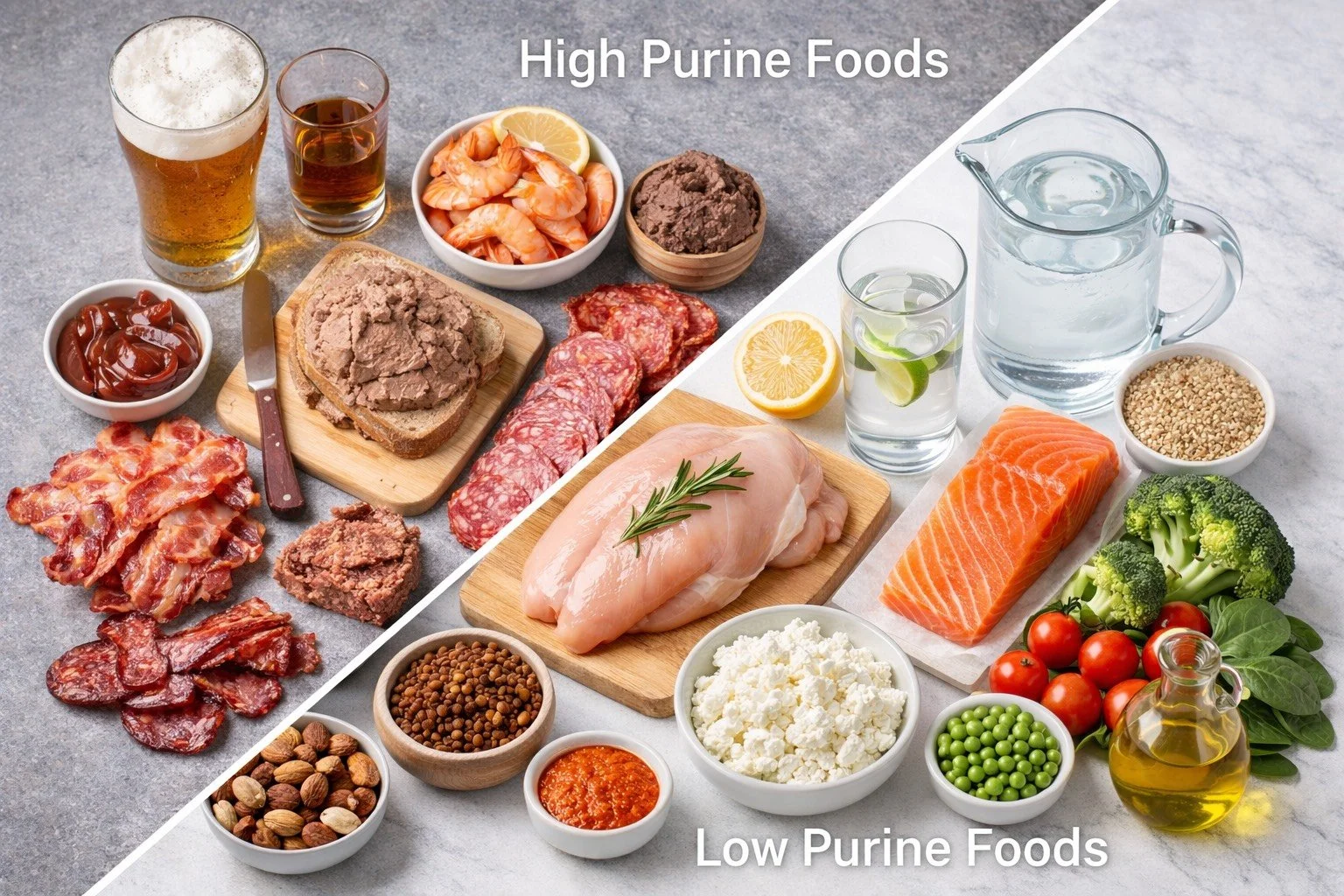
Foods and drinks most consistently linked with higher urate levels and flare risk include:
Beer (and often spirits)
Sugary drinks (especially those with fructose or high-fructose corn syrup)
Organ meats (liver, kidney, pâté)
Game meats
Certain seafood (anchovies, sardines, mussels, scallops; sometimes prawns)
Large portions of red meat and processed meat
A practical approach is not “never touch these again,” but: reduce frequency, keep portions sensible, and avoid stacking multiple triggers together (e.g., beer + dehydration + rich meat-heavy buffet).
Helpful Swaps and Habits That Actually Make a Difference
If you want a simple “starter plan” that most people can follow:
Hydration: aim for pale urine most days; extra fluids during/after alcohol
Alcohol: reduce overall; avoid binge drinking; beer is a common trigger
Protein: prioritise poultry, eggs, tofu, beans (for most), and low-fat dairy
Dairy: low-fat dairy is associated with lower gout risk in several studies
Fibre and plants: vegetables are generally helpful — and most vegetables, even those containing purines, do not seem to increase gout risk in the way meat/seafood does
Weight: if weight loss is relevant, aim for gradual, sustainable loss (crash dieting can trigger flares)
One important nuance: “purines” aren’t all equal in real life. Plant-rich diets are generally associated with lower cardiometabolic risk, and vegetables are not the enemy here. The bigger drivers are typically alcohol (especially beer), dehydration, and high intakes of meat/seafood plus sugar-sweetened drinks.
Final Thoughts: What to Watch Out For (and When to Get Help)
If you develop sudden, severe pain in a single joint — especially the big toe, foot, ankle or knee — don’t self-diagnose. See your GP, particularly if it’s your first episode. Seek urgent assessment if you have:
Fever or feel systemically unwell
A hot, swollen joint with rapidly worsening pain
Immunosuppression, diabetes, or a recent procedure
Uncertainty whether this could be infection
From a nutrition point of view, the most common “gotchas” around gout are:
Beer and dehydration
A run of rich meals stacked together
Sugary drinks and ultra-processed snacks
Heavy meat/seafood days without balancing with plant foods and fluids
And finally: if you want personalised guidance — particularly if gout is recurrent, you have kidney disease, you’re on multiple medicines, or you’re trying to lose weight — it’s worth speaking with your GP and a dietitian. The best plan is the one that controls symptoms, reduces long-term urate burden, and fits your real life.